Solar Water Heating
Expected energy use
Water heating in a typical New Zealand home typically accounts for 30% of the energy used by the building, with an additional 30% consumed by space heating1.
As the design of the ZEH avoids the need for space heating we expect hot water usage to be between 40% and 45% of total energy demand. For a typical home this equates to 3200kWh or ~$765/year.
The use of low flow shower heads and other low flow fittings will help reduce hot water demand. For example, the low-flow Kiri showerheads from Methven that we're using cut hot water use by 40%. With showers being one of the largest areas of how water use in a home this has a significant impact on the size of the solar water heating system.
Solar water heating technologies
There are two main types of solar hot water collector used for domestic hot water heating. Both operate using the same basic concept:
- A collector plate is heated by the suns energy, and
- To minimise the amount of this heat being lost back to the air the collector plate is insulated.
There are three main factors influencing the efficiency of the collector:
- How much solar energy falls on the collector plate (primarily a function of the type of glass, the location and therefore available solar energy, and the angle/direction the collector is installed at).
- How much of the solar energy that falls on the collector plate is absorbed and transferred to the water rather than being re-radiated (primarily a function of the solar collector plate coating).
- How much of the energy absorbed by the collector plate is lost back to the air (primarily a function of the insulation).
The two main types of collector designs are:
- Evacuated tubes. The solar hot water collector plate is insulated by an evacuated glass tube.
- Flat plate. The solar hot water collector plate is insulated by a mineral wool (or similar) and the front by a sheet of glass.

Evacuated tube solar hot water collector
Flat Plate solar hot water collector array
Our system

The solar water heating system is from SolarCity, where Shay is head of Design & Innovation.
We expect to get 80% of our water heating needs from the Artline solar collectors, which is around 40% of our total energy requirements. The solar water heating system is a key component in achieving Zero Energy.
The Artline collectors are proven to be reliable, having been manufactured in Christchurch for over 30 years.
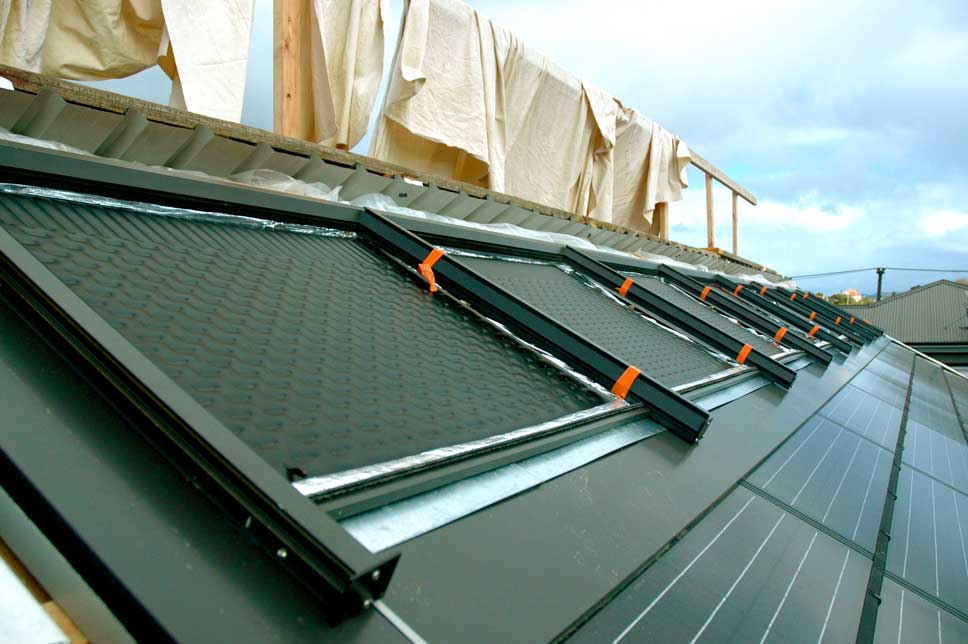
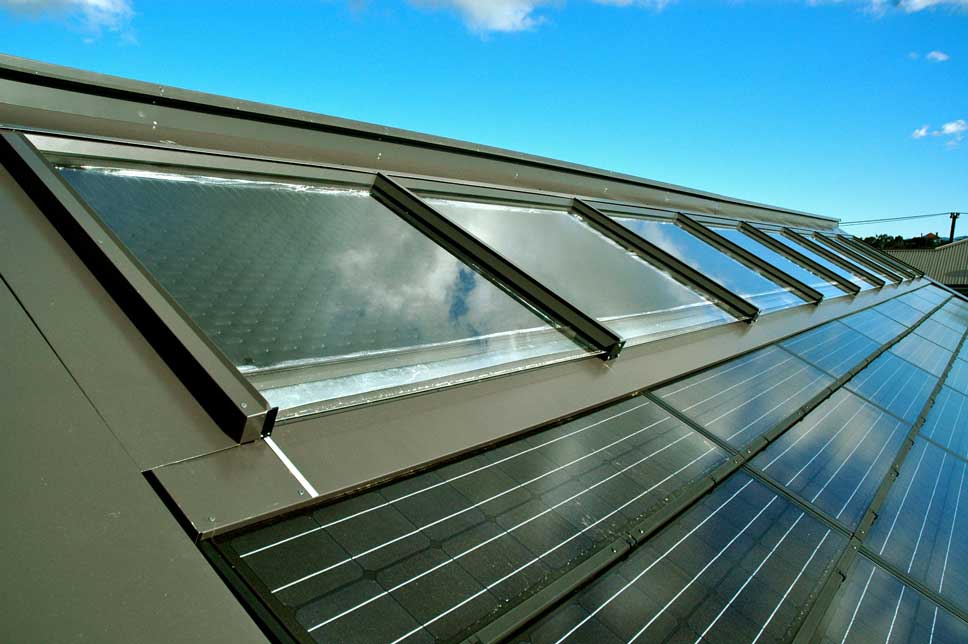
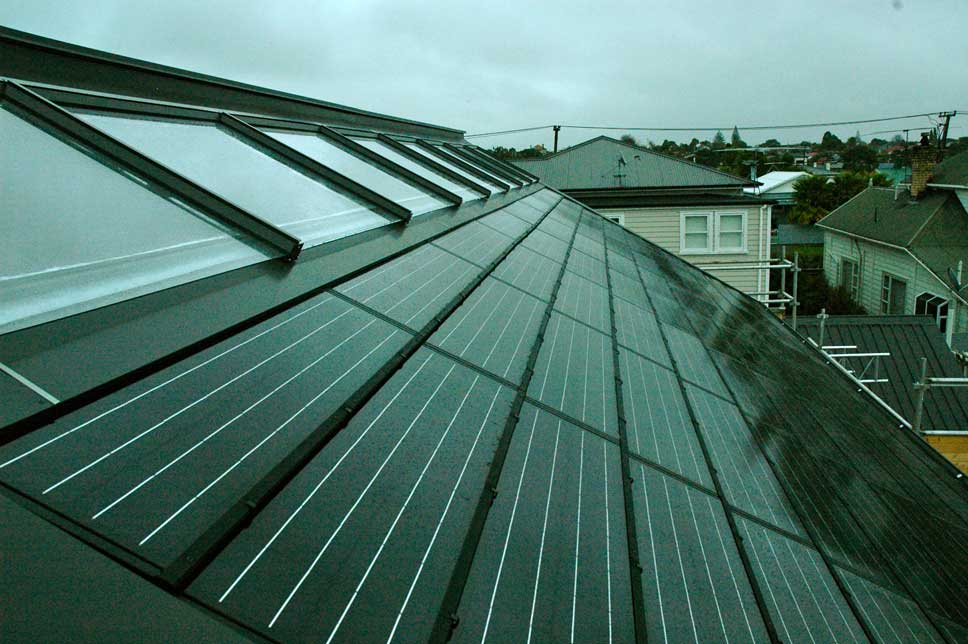
The solar water heating system at the Zero Energy House uses Artline flat plate collectors. Eight collectors, insulated and covered by protective glass, are laid out next to one another to run the full length of the roof-line.
The system works by pumping water to the roof, where it is heated by solar energy captured by the collector plates. Water is then returned to the hot water cylinder on the first floor of the house.
Artline hot water collectors have been manufactured in Christchurch for 30 years and have proven to be reliable and well performing over this time. We are excited to be able to use a locally made innovated product.
Predicted system performance
We expect to get up around 80% of the hot water heating demand from the solar water heating system, a 35%-40% saving in energy usage for the house.
This is higher than typically expected and is a result of the system being sized larger than usual.
The chart below shows expected energy usage over the year.
- The yellow area is the maximum expected to be generated by the solar water heating system.
- The orange area is the portion that will be produced by the backup heating element.
The solar circulator

The PM2 solar circulator from Grundfos.
Like most houses we store our hot water in a hot water cylinder, but the majority of the water heating takes place in the solar hot water panels on the roof.
To pump water onto the roof and through the panels we’re using a PM2 solar circulator from Grundfos.
Like the rainwater pump the PM2 is variable speed. But whereas the rainwater pump speed is controlled by the volume of water demanded the solar circulator is controlled by the level of heating available from the sun. When there is less solar energy available water is heated more slowly, meaning the pump needs to operate at a slower speed to keep water on the roof for a longer period of time. In bright sunshine water is heated more rapidly, so the pump needs to shift water around the panels at a faster speed.
The solar hot water controller adjusts the flow rate by changing the pump speed. The pump speed required is based on temperature measurements taken at the cylinder and the outlet of the solar collectors. It is constantly adjusted to keep the temperature difference between those two points at around 10°C.
A Grundfos Direct Sensor RPS (Relative Pressure Sensor) installed on the flow line of the solar circuit allows pressure monitoring to alert us to any leaks in the system.
Like the rainwater pump this controlled variable speed allows the PM2 to operate as efficiently as possible, requiring up to 80% less energy than a comparable constant speed pump.