Photovoltaics (PV)
Expected energy usage
Specifying the size of a PV system begins with first understanding the expected energy use within the home.
Many of the design features (including the building envelope and systems) help to minimise our energy use. We expect these features to allow us to need between a third and a half of the energy of an average Auckland house.
The BRANZ HEEP Study1 shows the average Auckland home uses 10,660 kWh of energy a year. Of this over 30% is for water heating and about 28% is for space heating. Our thermal modelling results show we will be able to avoid space heating on typical winter days. Systems modelling has shown that with a solar hot water system we can reduce electrical energy requirements for water heating by over 80%.
The average Auckland home uses 10,660 kWh of energy a year.We'll use around 3,500 kWh.
When taking into account all of our predicted energy uses we expect that we will consume approximately 3500 kWh/a.
PV system size & selection
The north side of the roof is completely covered with solar, split between solar water heating and photovoltaic panels. We expect the PV array to generate at least 1,250kWh/year for every kWp installed, so to meet our expected energy usage of ~3,500kWh we needed to install ~2.8kWp.
We considered two technology options - amorphous thin film silicon and crystalline thin film silicon. There are pro's and con's with each but the largest determining factor for us was that thin film has a lower efficiency and therefore required a larger area to achieve the same power output. Using a standard PV module size we could only fit 2.3 kWp of thin film. To provide enough flexibility with the size of the array we needed to use mono or poly crystalline and with these technologies could fit up to 4.2kWp.
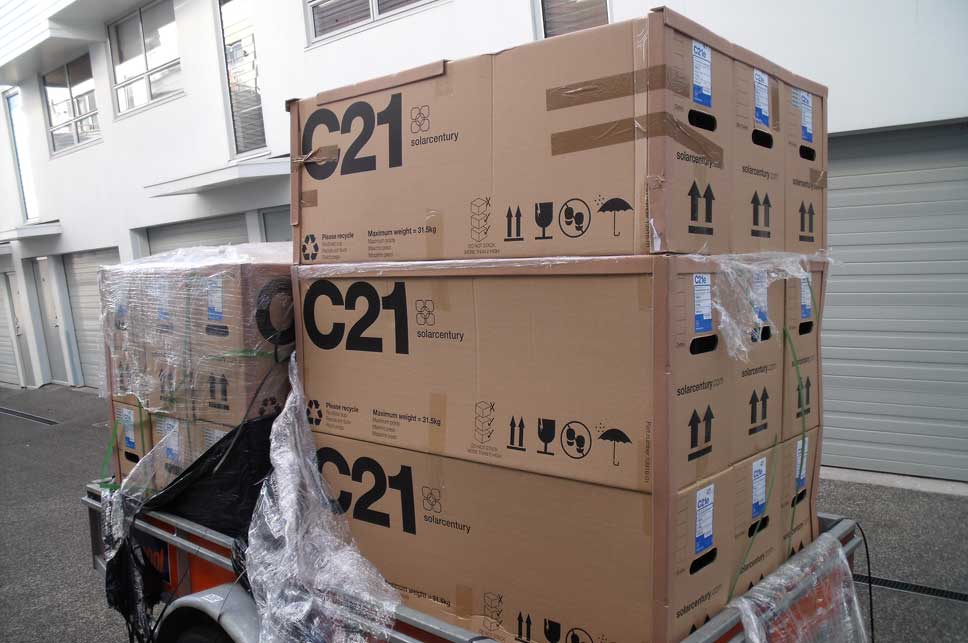
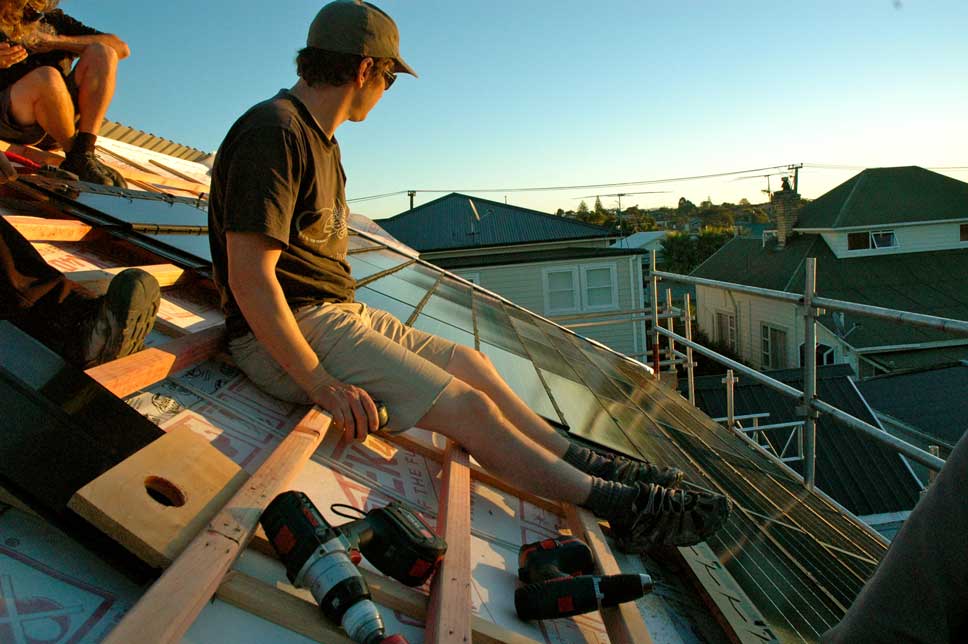
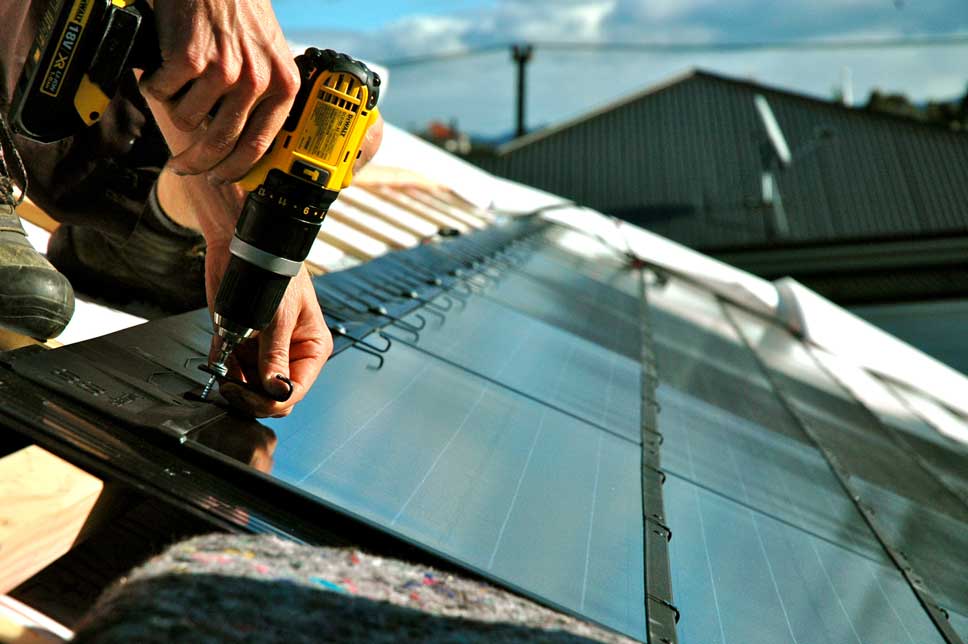
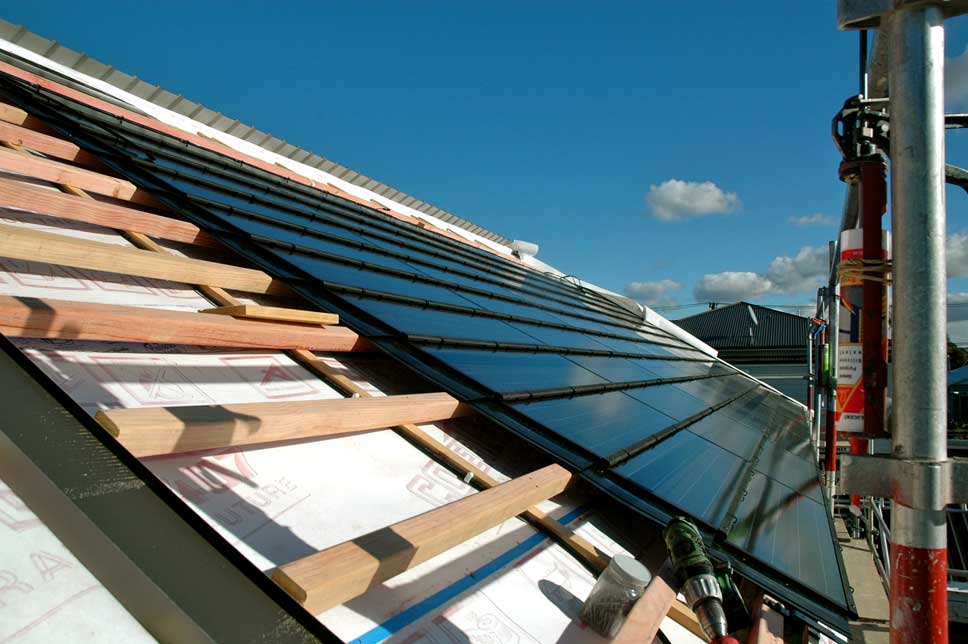
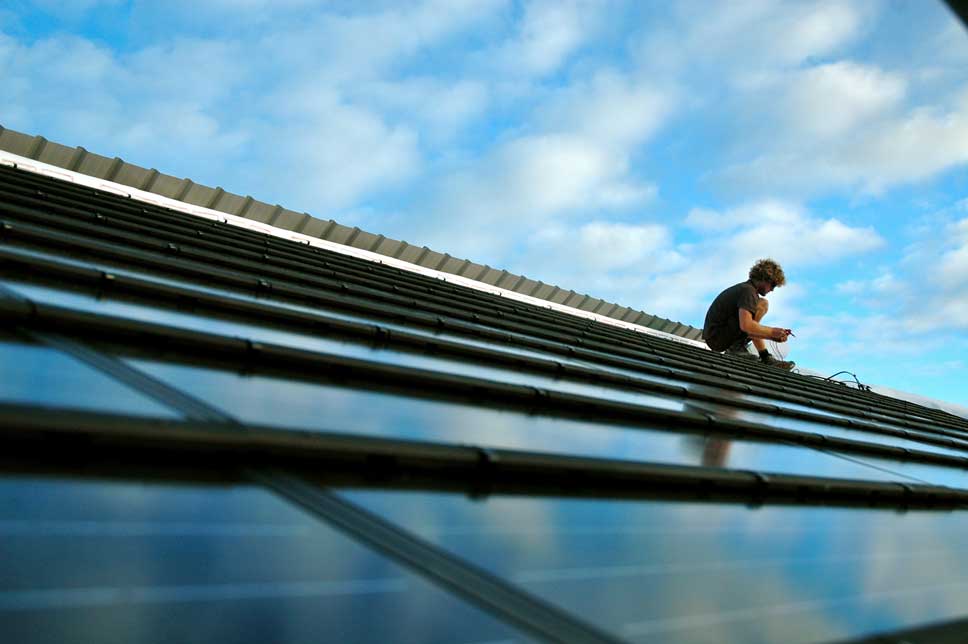
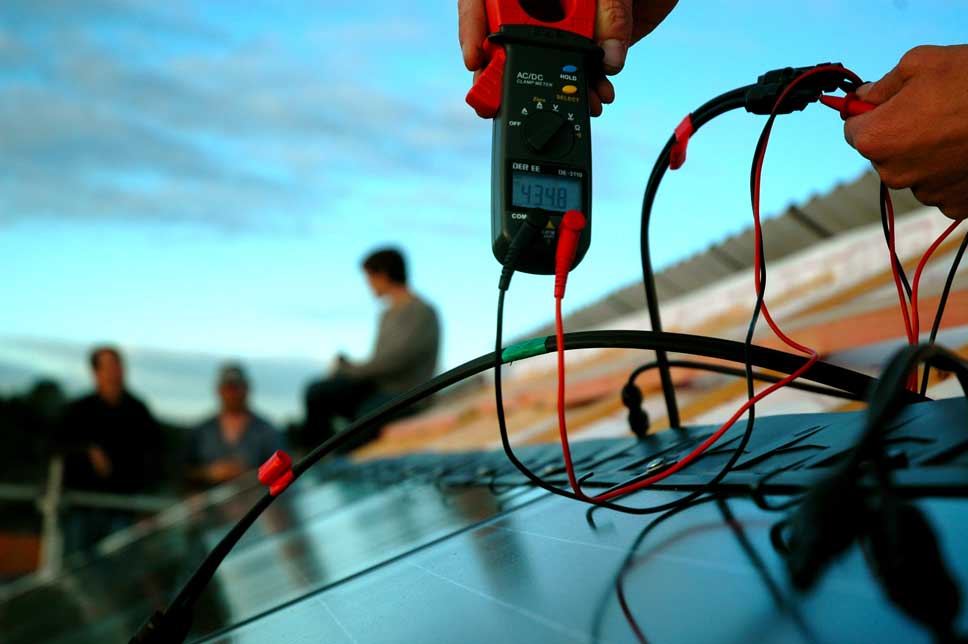
We have actually installed a 4.16kWp PV array consisting of 88 x C21 roof tiles.

Proposed solar array layout as of 25/05/2010
The grid connection
We've installed a grid-connected PV array. Rather than store energy onsite in batteries, any energy that is not immediately used in the house is exported back to the electricity grid. When there is insufficient energy generated by the PV array for the needs of the house, energy is imported from the grid.
This type of system is more cost effective both initially and over time as no batteries are required for set-up or replacement. Also, by not storing batteries we are avoiding toxic elements such as lead and acid on the property. Instead, with a grid-connected system we effectively use the grid as our battery.
Energy patterns
Live energy
Solar radiation offline W/m2
PV generation offline W
The feeds on the right show current generation from the PV system and available solar radiation. The chart below shows our predicted energy patterns over a typical year:
- Red. Volume of energy used per month (the effect of solar hot water generation has been taken into account in the energy usage).
- Blue. Volume of energy generated per month from the solar photovoltaic system.
- Green. Net energy volume exported to the grid. As we have more PV than we need for our energy requirements we will, over the course of a year, generate more energy than we use. As discussed above, this surplus energy will be sold to a retailer via the grid.

This beta PV system is a from SolarCity.
Our models show the system will generate surplus electricity for nine months of the year, with a small monthly deficit in winter.
Over the course of a year it'll generate more energy than we use, and is a key component in achieving Zero Energy.
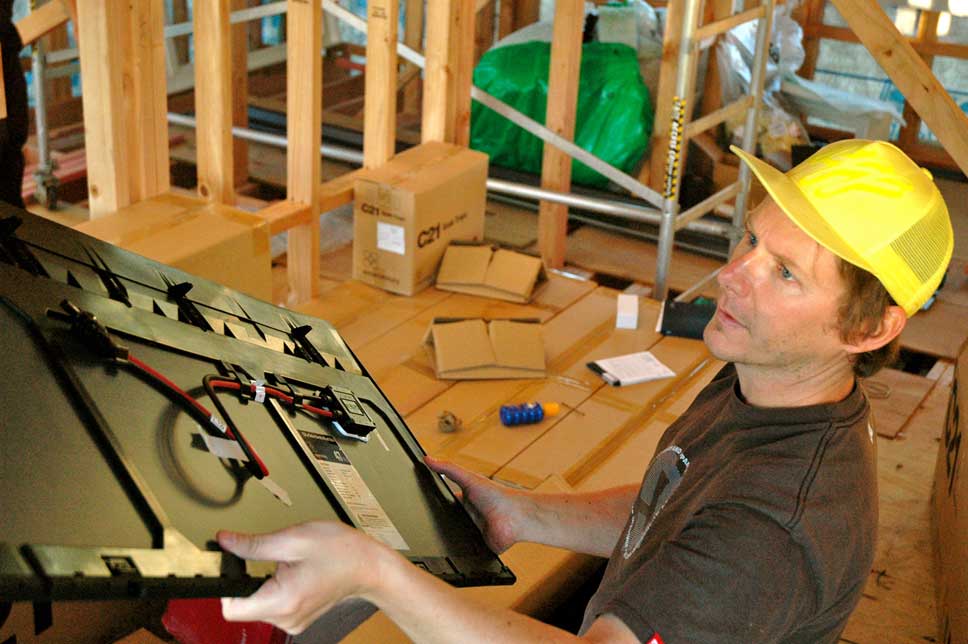
The C21 roof tiles
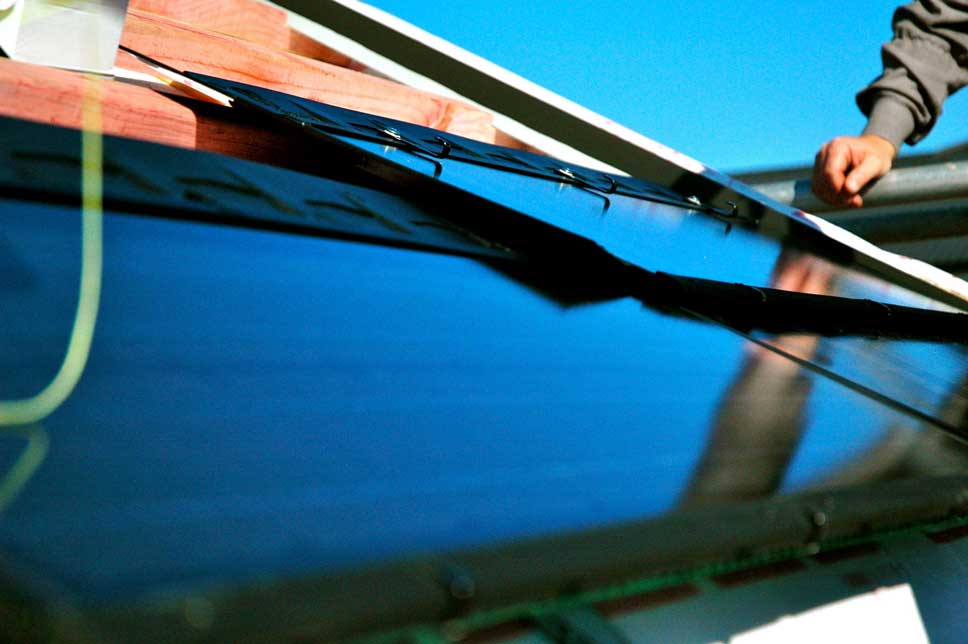
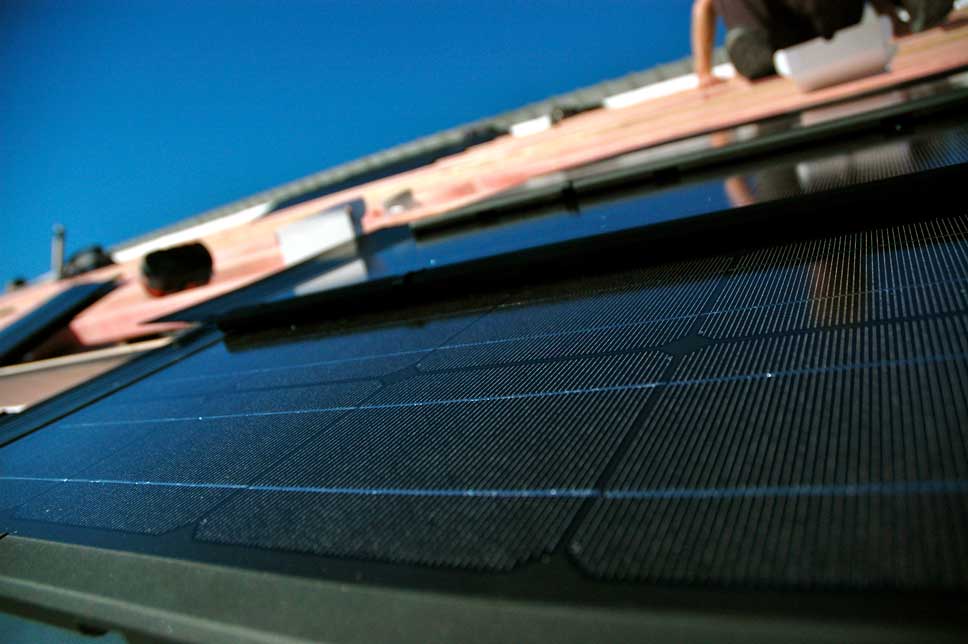
The C21 is different to any other PV panel you'll see in New Zealand. In fact, the Zero Energy House is the first building in the southern hemisphere to have these panels fitted.
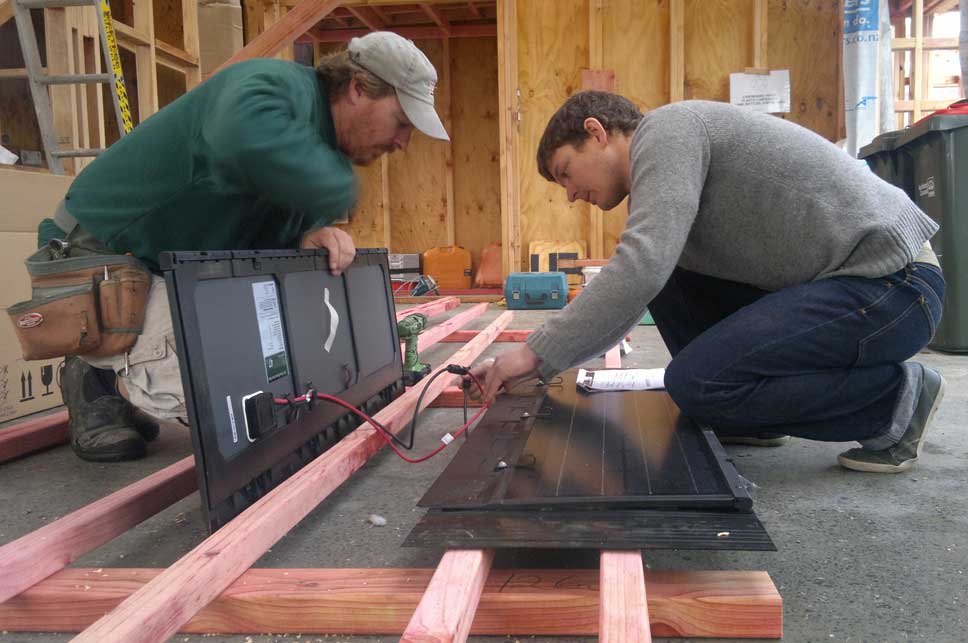
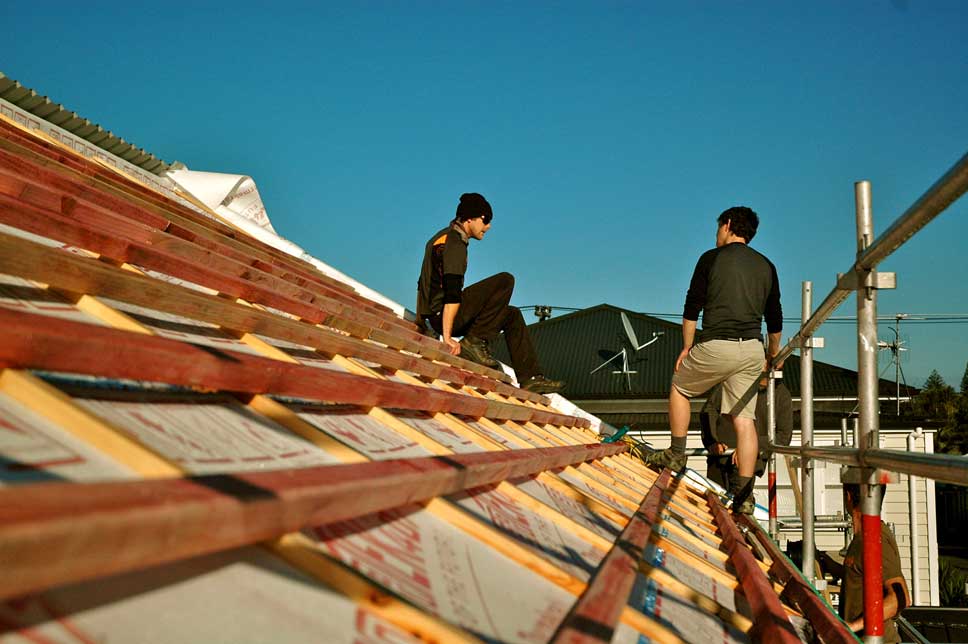
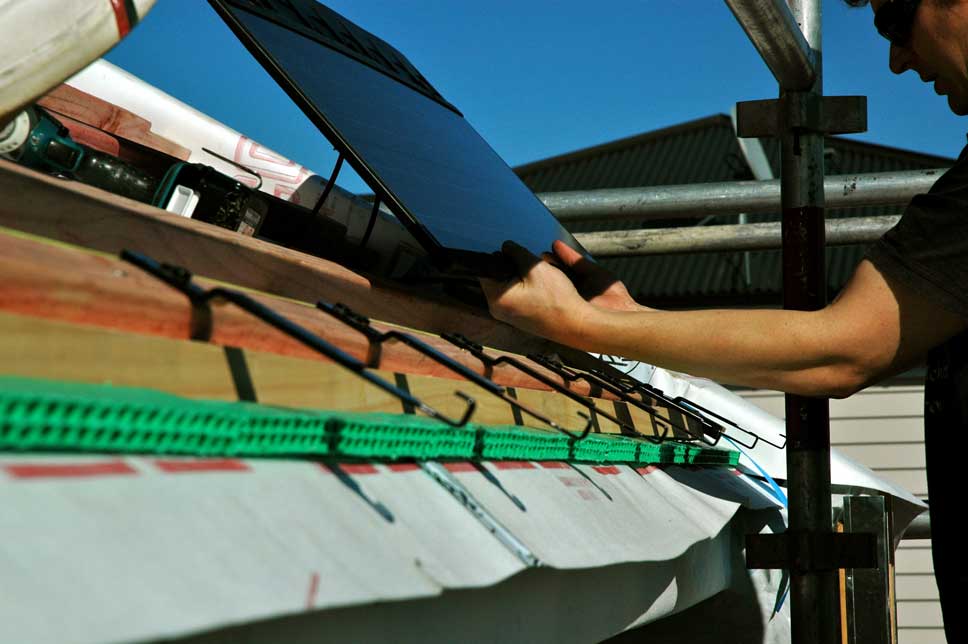
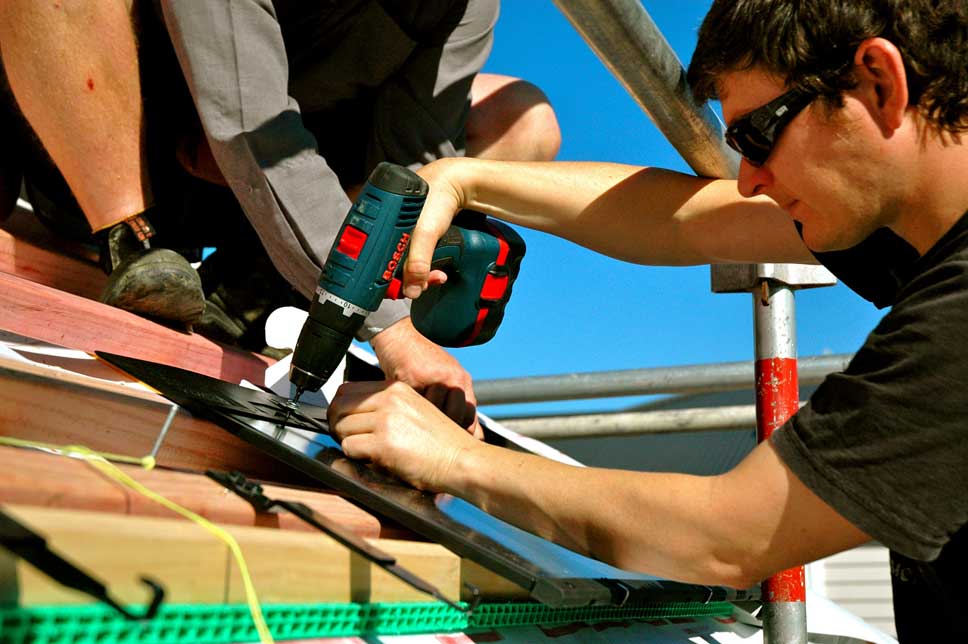
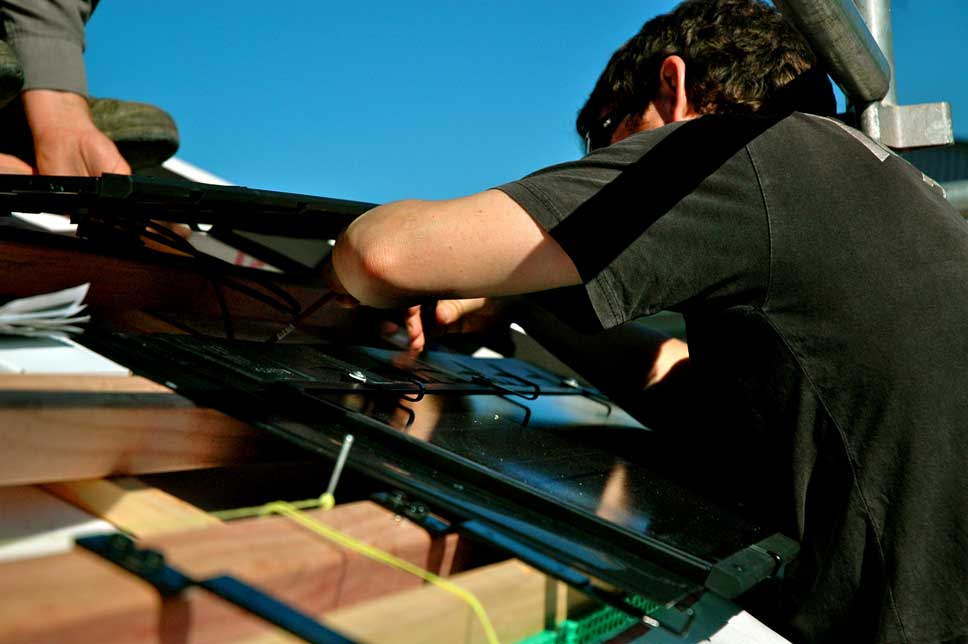
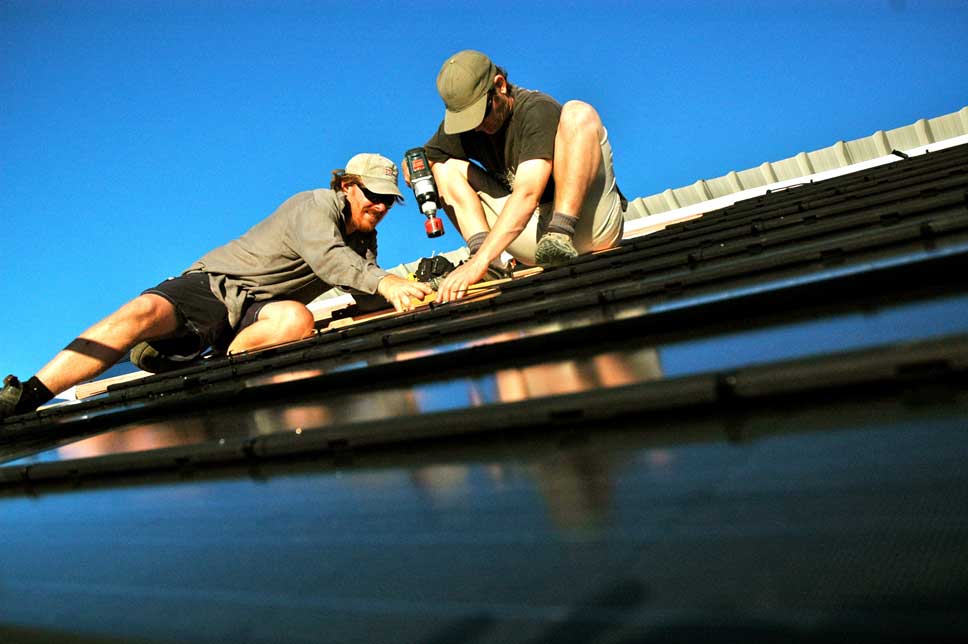
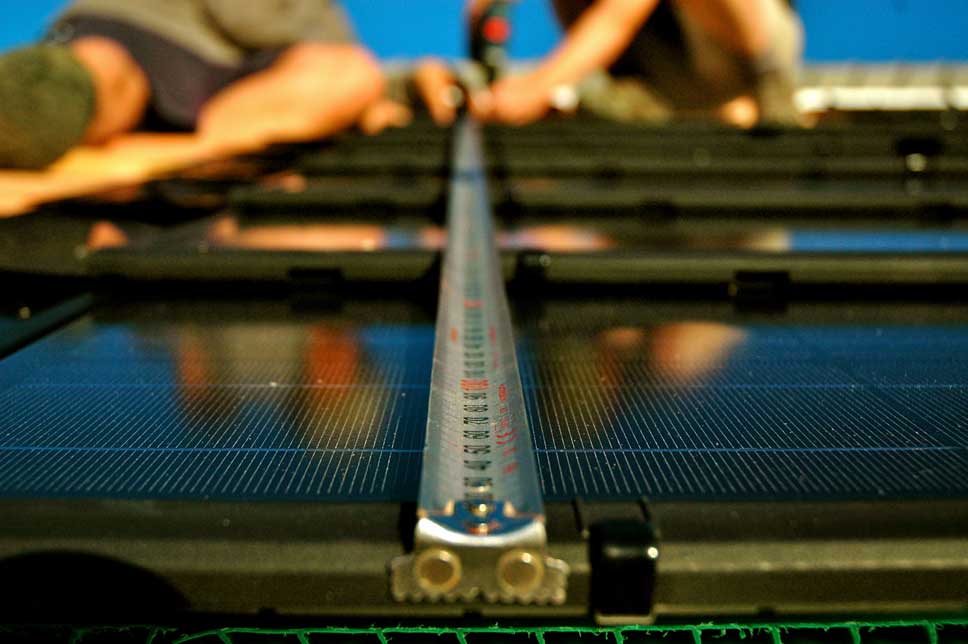
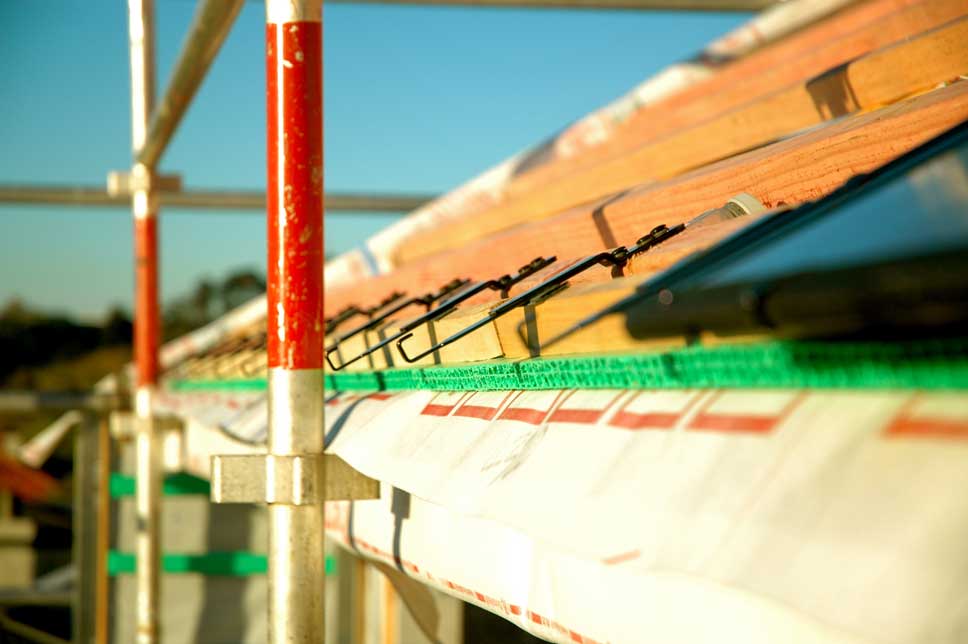
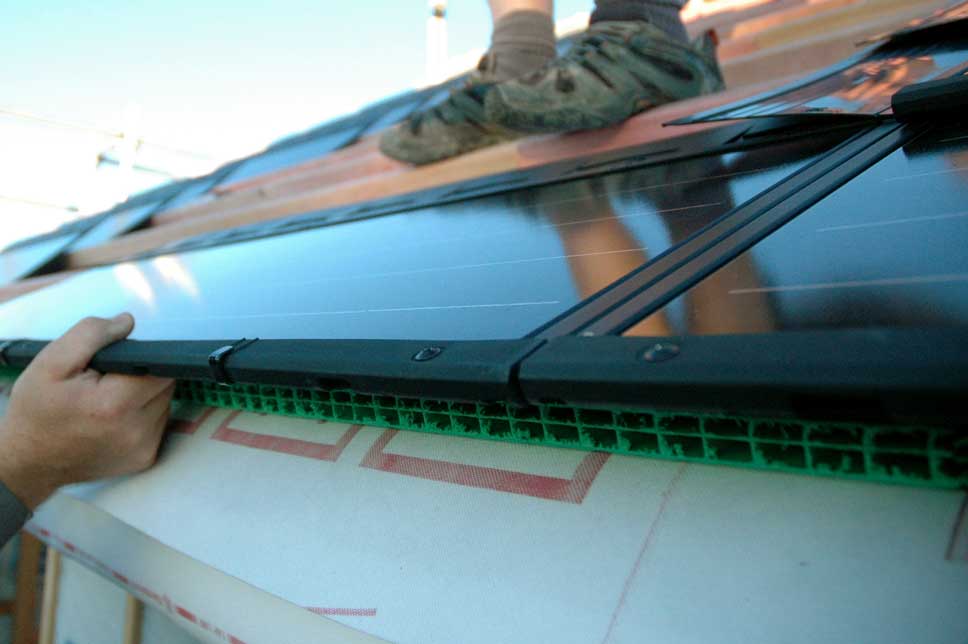
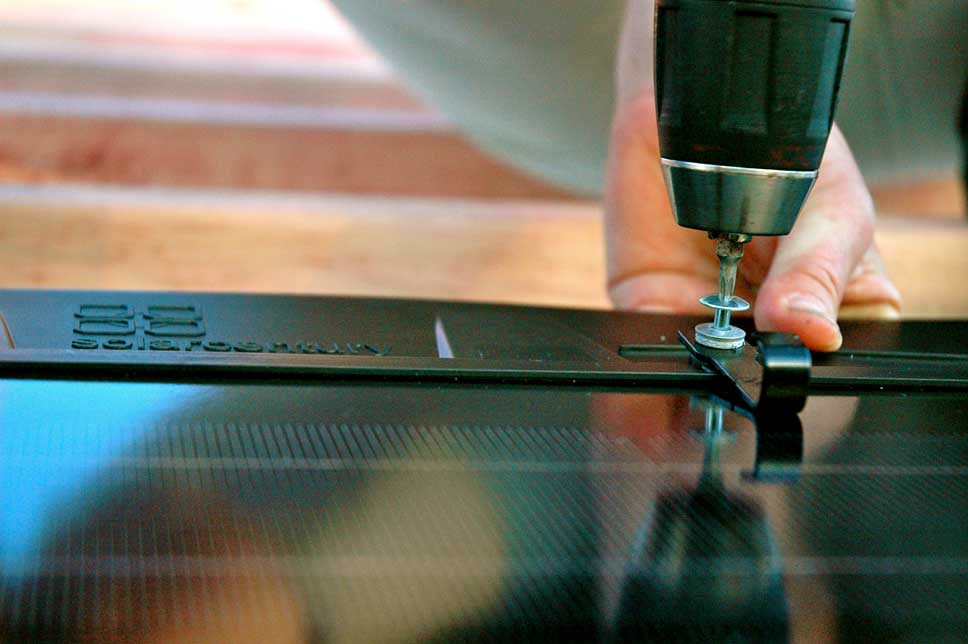
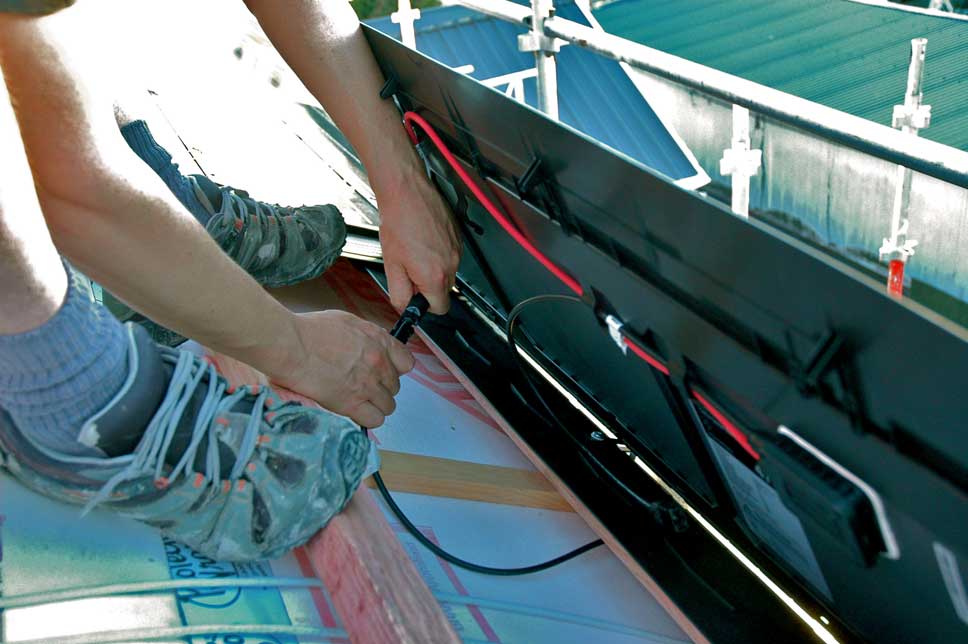
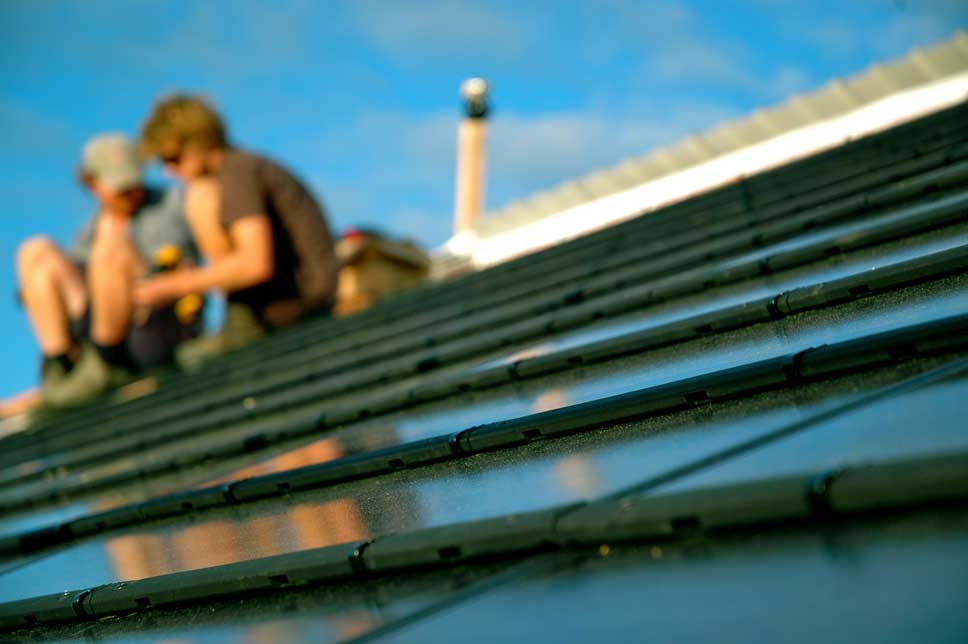
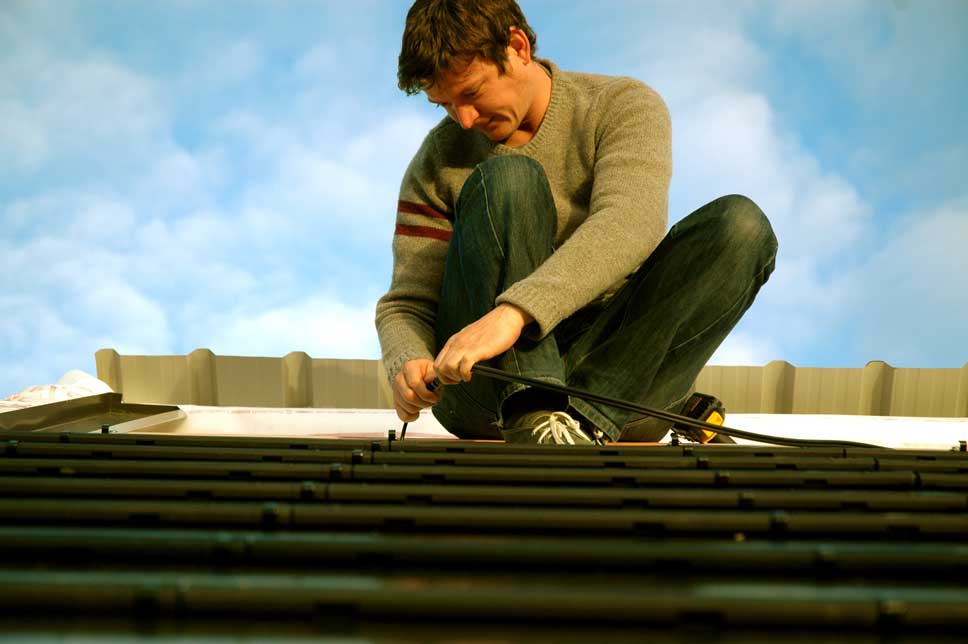
What makes the C21 different is that it replaces the building's roof. Whereas traditional PV panels are fixed to a steel or tile roof, the C21 performs as both a panel and a roofing tile. Eighty-eight of them cover most of the north-facing side of our roof, fixed onto battens like a normal roofing tile.
While this is the first time an integrated solar roof tile has been used in New Zealand, they are becoming increasingly common overseas. The C21 product is in its third generation, has been installed in the UK for seven years, and last year won the Queens Award for innovation. We believe the elegance and simplicity of panels like the C21 will make them standard in New Zealand for new houses built with solar in mind.
Towards the middle of 2014 we'll present a full year's analysis on the performance of the PV system on the Energy Performance page. We'll also compare the long-run costs of the Zero Energy House with those of a house built to building code and without PV.
If you'd like to be notified when that content goes live, subscribe using one of the methods in the footer.



Footnotes
1 Building Research Association New Zealand (BRANZ). (2006). Energy use in New Zealand households: Report on the year 10 analysis for the household energy end-use project (HEEP). p17.